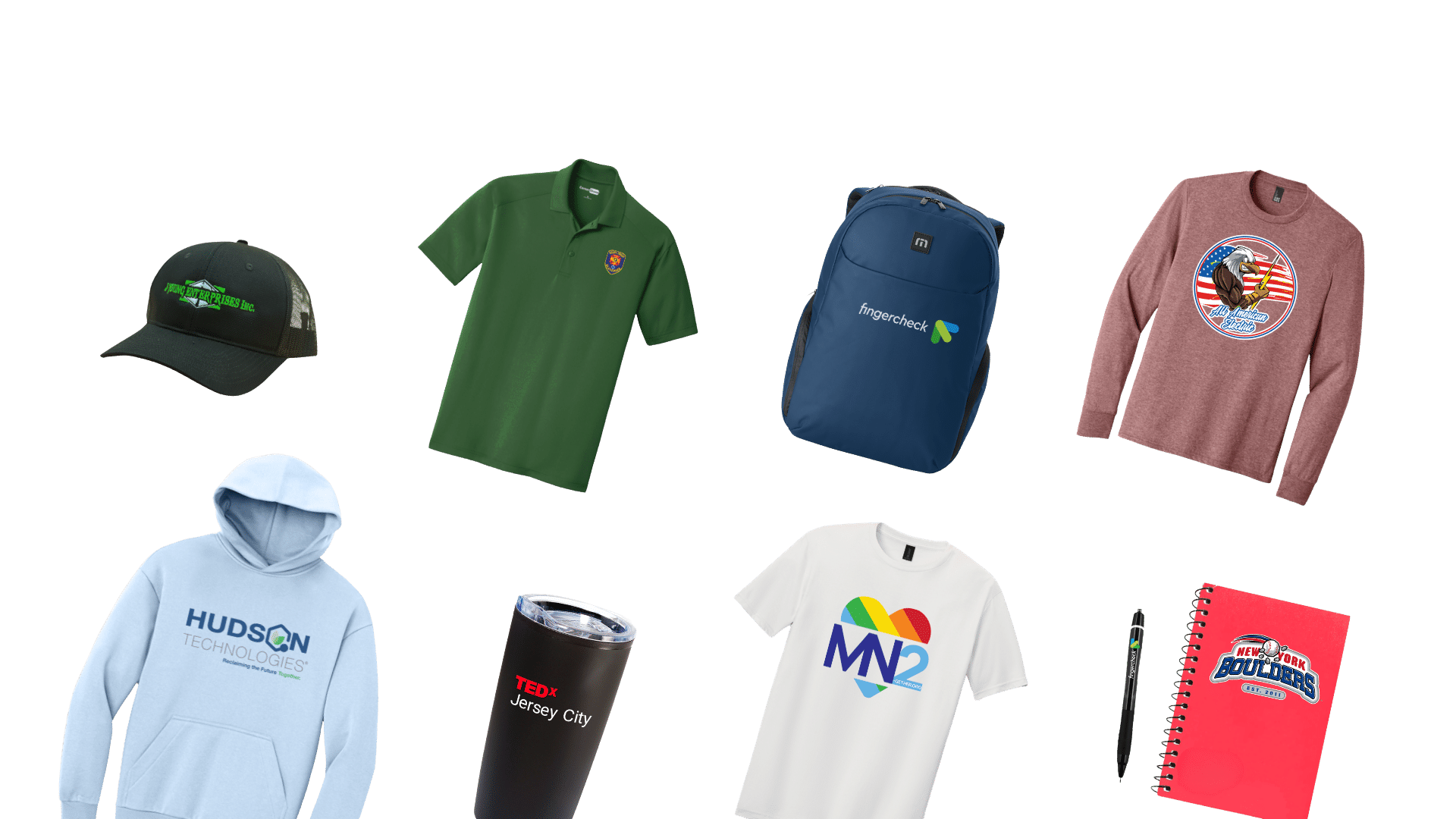
Complete Guide to Apparel Printing Types & Decoration Techniques
In today’s competitive market, how your team looks matters almost as much as how they perform. A uniform that fades after a few washes or a giveaway pen with a logo that rubs off in weeks not only wastes budget but also reflects poorly on your organization.
That is where the correct printing method makes the difference. Choosing the proper imprinting process ensures your apparel, promotional items, and corporate gifts look professional, last longer, and deliver value.
Why Custom Printing Methods Matter
Durability
Logos that withstand repeated washing, handling, or daily use
Fit for purpose:
The correct technique for daily duty wear, short-term events, or executive gifting
Budget control
Lower reorders and reduced waste when products last longer
Professional perception
Raised embroidery signals authority, foil stamping conveys luxury, and sublimation delivers vibrant team spirit
Consistency across divisions: Uniform decoration keeps every department aligned under one visual standard
Custom Printing Methods by Material Type
Custom printing techniques vary depending on whether you are branding soft fabrics or hard surfaces.
Decoration Methods by Material Type
Decoration methods are not one-size-fits-all. The right technique depends on the material surface, how often the item will be used, and the impression you want to leave. Below is a comprehensive breakdown, divided into soft material surfaces (fabrics and textiles) and hard material surfaces (rigid substrates, such as metal, glass, leather, and wood).
1. Soft Material Surfaces (Fabrics and Textiles)
Screen Printing
This method pushes ink through a mesh stencil onto fabric. It is ideal for large-volume apparel orders such as event T-shirts, spirit wear, and casual staff gear. Screen printing delivers bold colors and is cost-effective at scale.
Embroidery
Embroidery stitches colored thread directly into the fabric, creating a raised and durable finish. It is commonly used on polos, jackets, and caps. It withstands repeated washing and looks professional, but is not suitable for fine details or small lettering.
Sublimation
This method utilizes heat to convert dye into a gas, thereby embedding it into polyester fibers. It produces vibrant, fade-resistant colors and is ideal for athletic jerseys and performance gear. It only works on light-colored polyester fabrics.
Heat Transfer Printing
Designs are printed on a transfer sheet and then pressed onto the fabric with heat. It allows for detailed, full-color images and is a good option for small runs or short-term projects.
Vinyl Cut
Designs are precision-cut from vinyl sheets and heat-pressed onto garments. This method is widely used for sports uniforms with names and numbers, delivering bold, vibrant colors and a durable finish.
Tone-on-Tone
A subtle decoration style where logos or designs use similar shades to the garment. It is often chosen for upscale uniforms and branded accessories. It emphasizes sophistication over visibility.
2. Hard Material Surfaces (Rigid Substrates)
Label Printing:
Produces crisp, branded labels for packaging and product containers. It is widely used for consumables and promotional packaging.
Wood Engraving:
Carves designs into wood, providing a rustic, authentic look for plaques, signage, or cutting boards.
Foil Printing (Hot Stamping):
Applies metallic or glossy foil for a premium effect, commonly seen on notebooks, invitations, and luxury packaging.
Metal Engraving:
Engraves text or designs permanently into plaques, plates, or awards. It is valued for precision but is more costly than surface printing.
Pad Printing:
Uses a silicone pad to transfer ink onto curved or irregular surfaces. It is versatile and often used for items such as pens, keychains, and promotional products like drinkware.
Rotary Printing:
Allows seamless, full-wrap printing on cylindrical products such as mugs or water bottles.
Glass Etching:
Removes part of the glass surface to create a frosted, permanent design. Ideal for drinkware, trophies, and awards.
Embossing:
Raises a design above the surface, creating a tactile effect. It is commonly used on packaging, paper, or leather.
Laser Etching:
Removes a coating or surface layer to reveal the base material, usually on metals. Perfect for tumblers, plaques, and tools, it produces sharp, durable marks, but typically in a single color.
Debossing:
Presses a design into the surface, creating a recessed impression. It is frequently applied to notebooks, leather folders, and premium packaging.
Best Use Case Summary Based on Decoration Method
Screen Printing
Material Type:
Fabric
Best use Cass:
Bulk T-shirts, event wear
Key Strength:
Cost-effective for large runs
Trade-Off:
Cracks/fades over time
Embroidery
Material Type:
Fabric
Best use Cass:
Uniforms, polos, caps
Key Strength:
Durable, premium look
Trade-Off:
Limited fine detail
Sublimation
Material Type:
Fabric (polyester)
Best use Cass:
Athletic jerseys, performance gear
Key Strength:
Fade-resistant, vibrant colors
Trade-Off:
Only for light polyester
Vinyl Cut
Material Type:
Fabric
Best use Cass:
Sports uniforms,
names, numbers
Key Strength:
Easy
personalization
Trade-Off:
Can peel or crack
Choosing the Right Method: A Procurement Framework
Selecting the right technique requires balancing material, use case, volume, and brand goals.
- For uniforms: embroidery ensures long-term durability.
- For events, screen printing is cost-effective for bulk orders.
- For executive gifts, laser etching or embossing provides premium quality.
- For sports gear: vinyl and heat transfer make quick customization simple.
SOFT
(Fabric)
Bulk T-shirts, event wear
Crew uniforms, polos, hats
Athletic jerseys, performance gear
Small runs, detailed logos
Sports uniforms, names, numbers
Upscale uniforms, bags
HARD
(Metal, wood, plastics, acrylics)
Product packaging
Luxury packaging, notebooks
Accessories, ID case, clock
Drinkware, water bottles
Awards, plaques, tools
School supplies
Office desk items, tech
Mugs, cups
Packaging, leather goods
Choosing the Right Method: A Procurement Framework
Selecting the right technique requires balancing material, use case, volume, and brand goals.
- For uniforms: embroidery ensures long-term durability.
- For events, screen printing is cost-effective for bulk orders.
- For executive gifts, laser etching or embossing provides premium quality.
- For sports gear: vinyl and heat transfer make quick customization simple.
1
Get a Quote
2
We Design your Project
3
You Approve the Mockup
4
We Start the Production
5
We Delivery on Time
Let’s Bring Your Vision to Life
From outfitting a department to creating memorable giveaways, the right decoration method ensures your brand leaves a lasting impression. Whether it is uniforms, fundraising merchandise, or executive gifts, working with a reputable provider guarantees consistent, durable, and professional results.